
A Shift in the Experience of Movement
Contemporary travel has undergone a conceptual redefinition that extends beyond mere geographic displacement. Increasingly, it reflects a transition from the accumulation of visual impressions toward a deeper engagement with temporality. This evolution—aptly described as a movement from sightseeing to time-feeling—reconfigures the traveler’s role from observer to participant in the unfolding rhythms of place. Rather than privileging speed, coverage, and photographic documentation, this approach values duration, repetition, and attentiveness. The significance of such a shift becomes particularly evident in destinations where historical depth and cultural continuity demand interpretative patience.
Temporal Density and Cultural Stratification
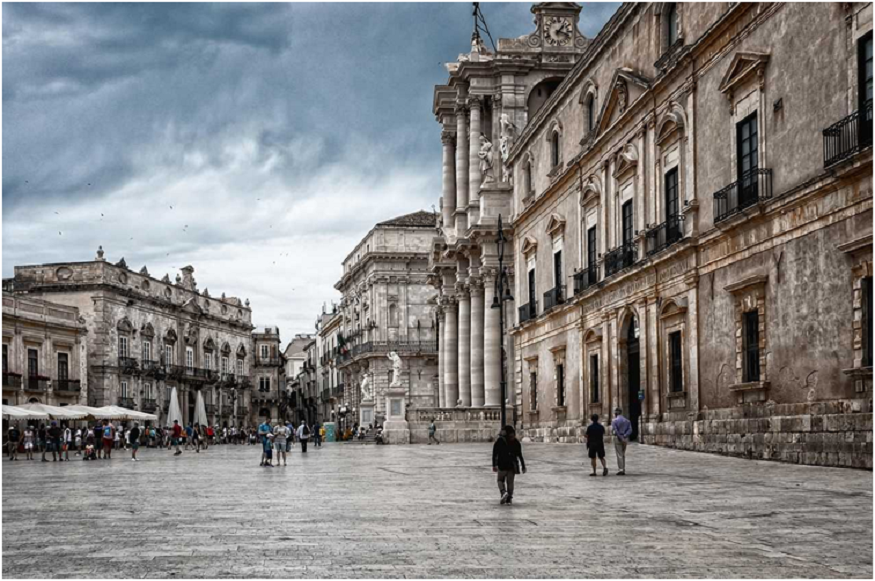
Within this framework, certain territories offer especially fertile ground for the practice of time-feeling. Among them, Italy stands out for its extraordinary temporal density, where successive civilizations have left discernible yet interwoven traces. Here, travel cannot be reduced to a linear itinerary; instead, it unfolds as a layered experience in which past and present coexist in complex configurations. A visit to the Archaeological Park of Syracuse, for example, illustrates how ancient structures are not isolated artifacts but components of an ongoing cultural dialogue. Likewise, attention to the most unexpected archeological sites in Italy reveals how even peripheral or lesser-known locations contribute to a richer, less hierarchical understanding of historical continuity.
Urban Calm and the Practice of Duration
The reorientation toward time-feeling is particularly evident in smaller or less congested urban environments, where the pressures of mass tourism are attenuated. Cities such as Lucca, Ravenna, and Matera provide contexts in which temporal immersion becomes feasible. Their human scale encourages slow movement and sustained observation, allowing visitors to perceive nuances that would otherwise remain obscured. In these settings, architectural forms, urban layouts, and local customs reveal themselves gradually, fostering an interpretative process that aligns with the principles of time-feeling. The experience is less about discovery in the conventional sense and more about attunement to continuity and variation.
Read More: “Travel Trends in 2026: How Smarter Planning Is Changing the Way We Travel”
Peripheral Geographies and Alternative Narratives
The evolution of travel also entails a reconsideration of peripheral or transitional spaces, which often escape dominant narratives. Regions such as Basilicata or Umbria demonstrate how quieter territories can sustain a more reflective mode of engagement. These landscapes, less shaped by intensive tourism flows, preserve rhythms that are not immediately legible but become intelligible through extended presence. Such contexts disrupt the conventional hierarchy of destinations, demonstrating that cultural significance is not confined to internationally renowned centers. Instead, they invite travelers to explore alternative narratives, where the interplay between history and everyday life unfolds with greater subtlety.
From Visual Primacy to Multisensory Awareness
The transition from sightseeing to time-feeling also implies a recalibration of sensory priorities. While visual perception remains important, it no longer dominates the experience. Soundscapes, tactile encounters, and temporal patterns assume greater relevance, contributing to a more comprehensive understanding of place. In Italy, this multisensory dimension is particularly pronounced: the resonance of footsteps in a narrow street, the modulation of light across historical surfaces, and the cyclical rhythms of local practices all participate in shaping perception. Such elements resist immediate consumption and instead require prolonged exposure, reinforcing the centrality of time in the travel experience.
Read More: The Intrepid 407: The Essential Miami Center Console
Toward a Reflective Travel Ethos
Ultimately, the evolution from sightseeing to time-feeling signals a broader transformation in the cultural meaning of travel. It reflects a shift toward reflective engagement, where understanding emerges through sustained presence rather than rapid observation. In contexts characterized by historical complexity and regional diversity, this approach proves especially pertinent. By embracing duration, attentiveness, and openness to ambiguity, the traveler cultivates a more nuanced relationship with place—one that acknowledges the limits of immediate comprehension while valuing the depth afforded by time.